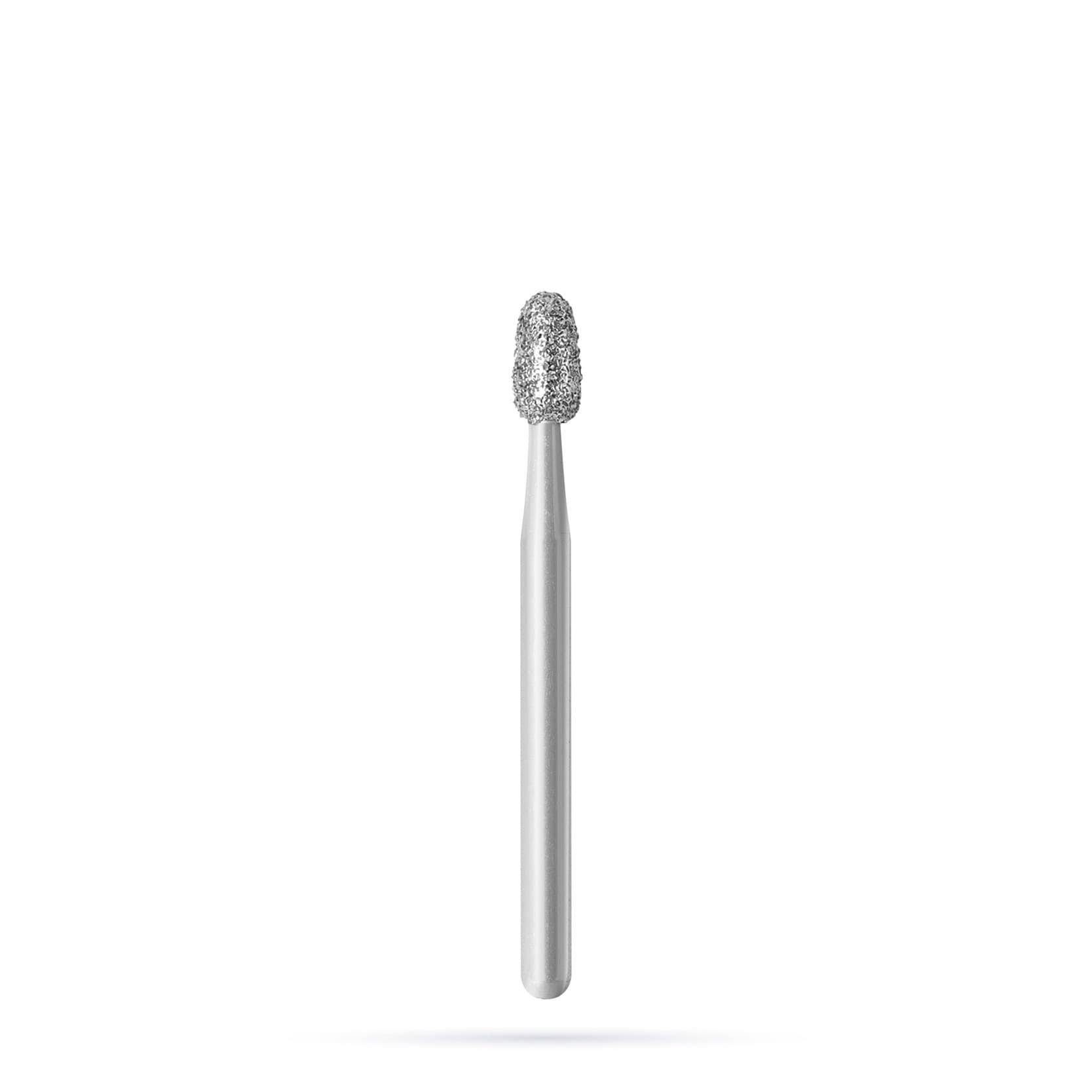
Carbide: which cut for which task?
Standard toothing in the clinic, A toothing for smoother running in surgery and the cutter matrix for the laboratory: how to choose the right carbide instrument.
Diamantbohrer · 1195 articles
To the rangeCarbide instruments cut rather than grind. How they cut is determined by the toothing: the number, shape and course of the cutting edges determine removal rate, smooth running and surface finish. In the clinic, a few proven toothings are sufficient. In the laboratory, where plaster, resins and alloys are worked side by side, each material needs its own.
Basic rule: chip space versus surface
- Coarse toothing with few cutting edges and large chip space removes material quickly and clogs less with soft materials.
- Fine toothing with many cutting edges removes less material and leaves smoother surfaces.
- Cross toothing breaks the chip into short pieces. The instrument runs more smoothly, does not catch and remains easier to control.
Read more about the interplay of toothing and speed in Understanding toothing and speed.
Clinic: standard toothing as usual
For preparation, removal of old fillings and trimming of metal and resin, the carbide burs work with the proven standard toothing, with FG shank for the turbine, RA for the contra-angle and HP for the handpiece:
- Straight toothing, for example on the round bur H1 for caries removal and cavity preparation
- Spiral toothing on the fissure burs H21 and H23, such as cylinder and cone, for an even cut along the cutting edge
- Spiral toothing with crosscut on H31 and H33: the crosscut breaks the chip, making it easier to remove old fillings
Laboratory: toothing according to material
The tungsten carbide burs for the laboratory carry an identification letter for the toothing, for example H129E or H129EF. Each toothing is matched to specific materials:
| Code | Toothing | Typical materials |
|---|---|---|
| E | Standard cross toothing | Plaster, model dies, model castings, denture acrylic |
| EF | Fine cross toothing | Precious metal, non-precious metal, model castings, veneering composites, PEEK and PMMA |
| VF | Super-fine diamond toothing | Precious metal, non-precious metal, soft ceramics, veneering composites, model dies |
| GTI | Coarse double cross toothing | Titanium, precious metal, model dies |
| DF | Fine diamond toothing | Precious metal, non-precious metal, model castings |
| QRF | Coarse twisted spiral toothing |
Sources
- ISO 6360: Dentistry, Number coding system for rotary instruments
- ISO 1797: Dentistry, Shanks for rotary and oscillating instruments
- rotatec Katalog, Kapitel Hartmetall und Fräsermatrix
- rotatec Anwendungs- und Aufbereitungsempfehlung Bohrer
More articles
Produkt
Diamonds for zirconia: the right instruments (rhodia)
Zirconia is both hard and brittle. Why it requires special diamond instruments and what matters when working with it.
Produkt
Round burs and excavators: controlled caries removal
Substance-preserving instead of aggressive: how round burs and excavators remove carious dentine precisely, why we stock carbide only, and what matters when choosing the size.
Produkt
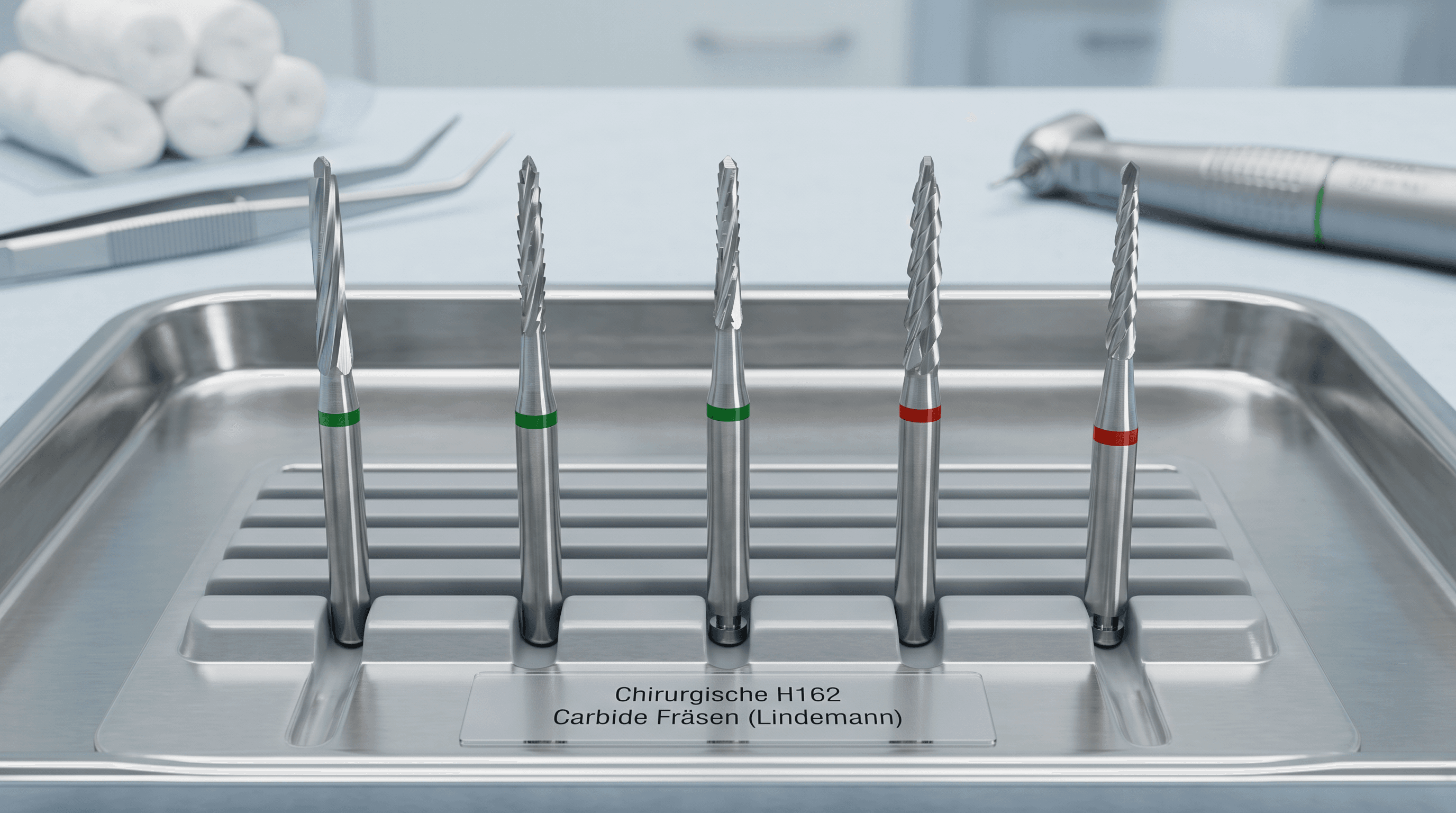
The Lindemann bur H162: which shape for which procedure
Osteotomy, root separation, bone work: the Lindemann bur is the workhorse of oral surgery. An overview of indications and handling.