
Understanding cutting geometry and rotational speed: what determines cutting quality
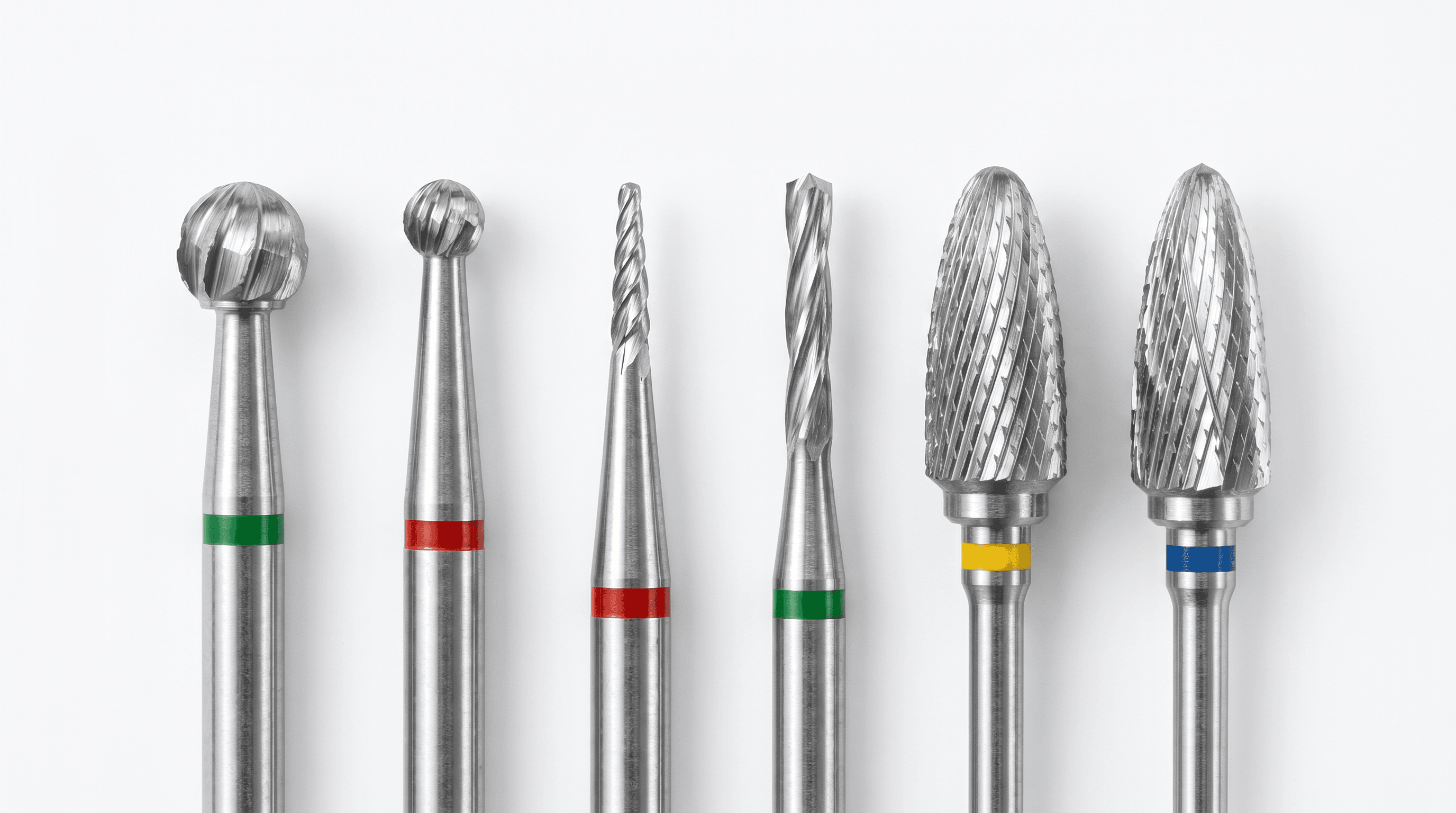
Why does one instrument cut smoothly and cleanly while another vibrates and catches? The answer lies in the cutting geometry, grit and rotational speed.
Cutting or grinding
Carbide instruments cut with defined blades, while diamond instruments grind with bonded diamond grains. Both principles have their place: cutting for metal, plastic and preparation; grinding for enamel, ceramic and hard materials.
Cutting geometry determines behaviour
With carbide, the cutting geometry is decisive:
- coarse-cut: rapid material removal, for preparation and surgery
- cross-cut: smooth running, short chips, no catching
- fine-cut (finishers): smooth surface as a preliminary stage to polishing
Grit of diamond instruments
With diamonds, the colour code indicates the grit, from coarse (rapid material removal) to extra-fine (finishing). A graduated approach from coarse to fine delivers a natural surface result.
The right rotational speed
Every shank and every application has a recommended rotational speed range. Too high a speed generates heat and wear, while too low a speed reduces efficiency. Working with irrigation and cooling, together with light pressure, protects both the instrument and the substance.
The interplay is what counts
Only the right combination of geometry, grit and rotational speed produces a clean, efficient cut. Those who understand these relationships make more targeted choices and work more smoothly.
Register as a trade customer and discover the range in the shop.
From our range
The toothing determines the cutting behaviour, and that is exactly why we offer a broad carbide range. For the clinic there are finely toothed finishers for smoothing and coarse cutting burs for preparation, for surgery cross-cut instruments that run smoothly, for the lab carbide cutters in various toothings. All instruments are Swiss Made to ISO 13485, in stock and ready to ship within 48 hours.
Register as a professional and find the right toothing in the shop.
That makes finding the right instrument fast: our shop can be filtered and grouped by material and application as well as many further specifications (shank, size, grit, toothing, pack size).
Sources
- ISO 6360-3:2005 – Number coding system for rotary instruments – Part 3: burs and cutters
- ISO 7711-3:2004 – Dentistry – Diamond rotary instruments – Part 3: grit sizes, designation and colour code
- ISO 1797:2017 – Dentistry – Shanks for rotary and oscillating instruments
- rotatec Produktkatalog und Gebrauchsanweisung (IFU), rotatec GmbH