Wird geladen …

EURLogin
Wird geladen …
2'414 items in stock, ready to ship in 48 hours.


11 materials · 667 items
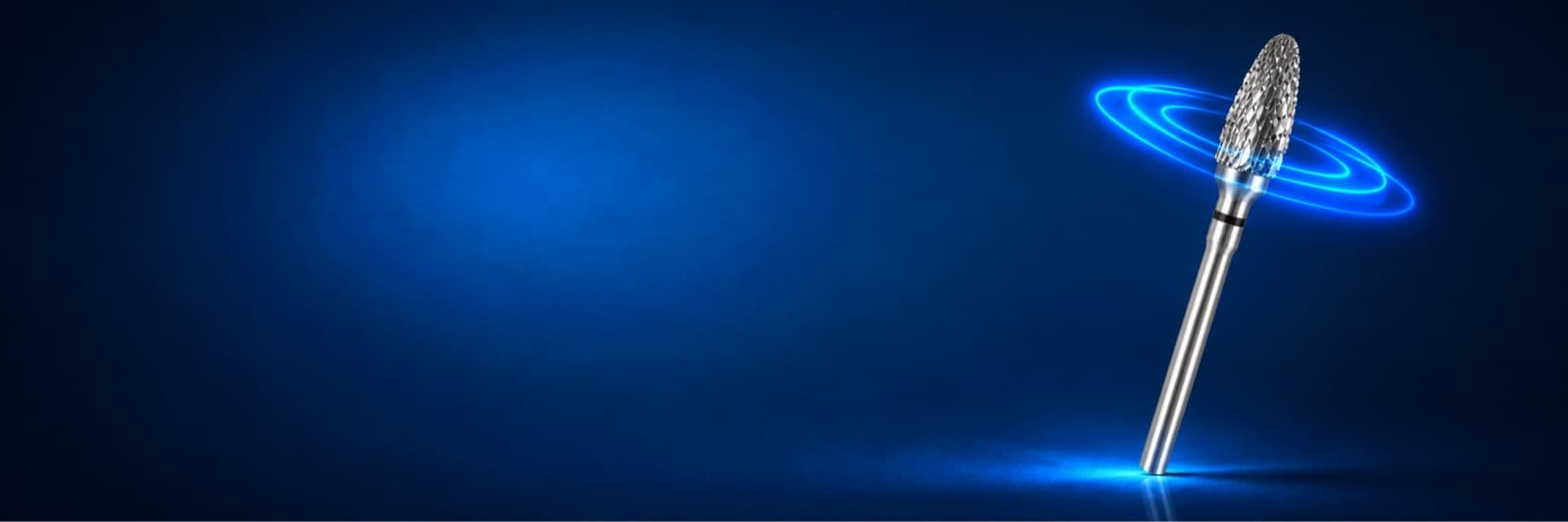
Carbide cutters contour denture acrylic, non-precious and precious alloys as well as plaster models quickly and precisely in the dental laboratory. Different flutings cover the range from coarse removal to a smooth surface.
Coarse cross-cut fluting with a large chip space removes a lot of material and clogs less, fine fluting leaves smooth surfaces. For the HP shank on the laboratory handpiece.
Direct from the Swiss manufacturer in Appenzell. Swiss made to ISO 13485, CE-MDR, stock items ready to ship within 48 hours.
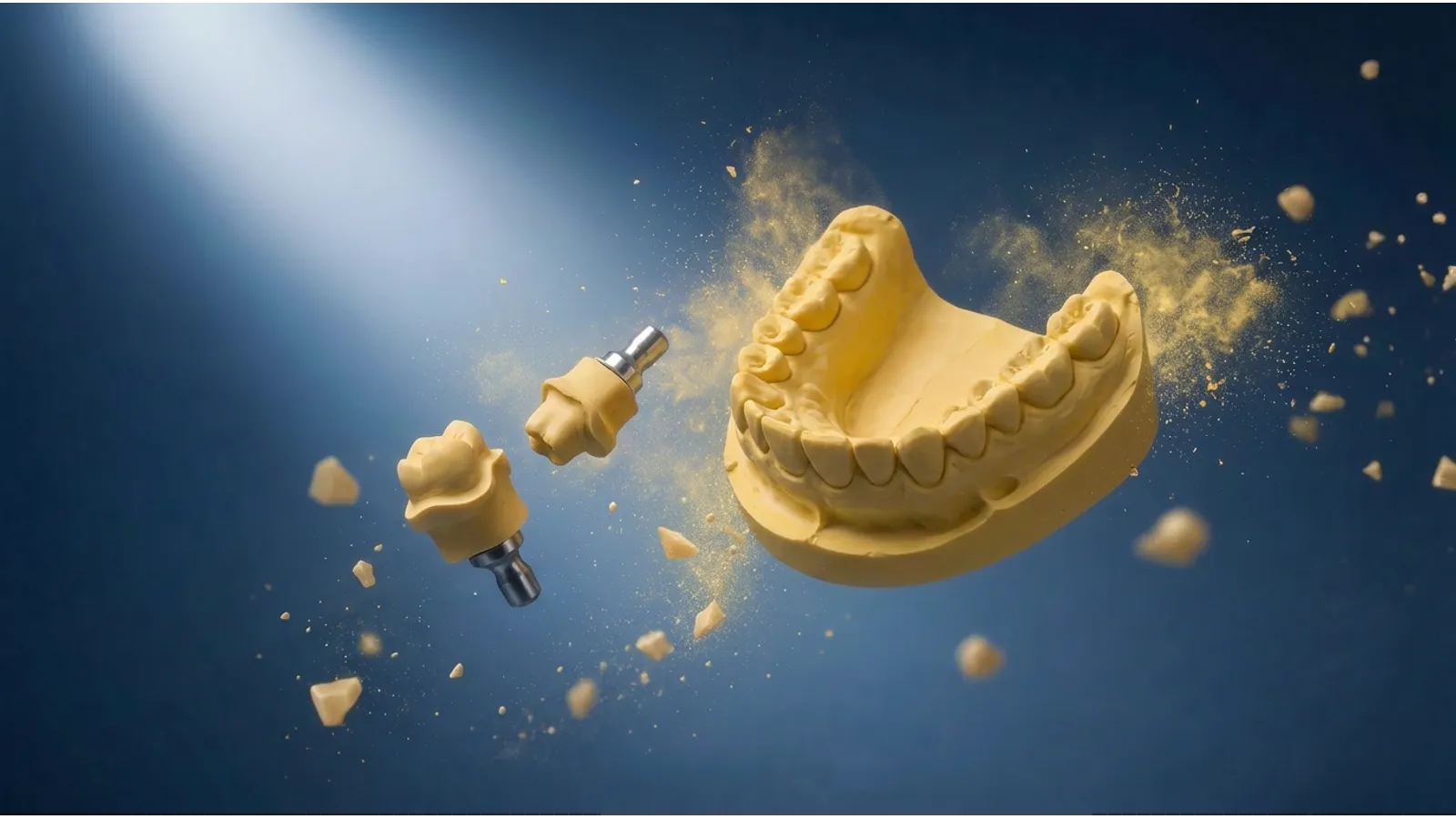
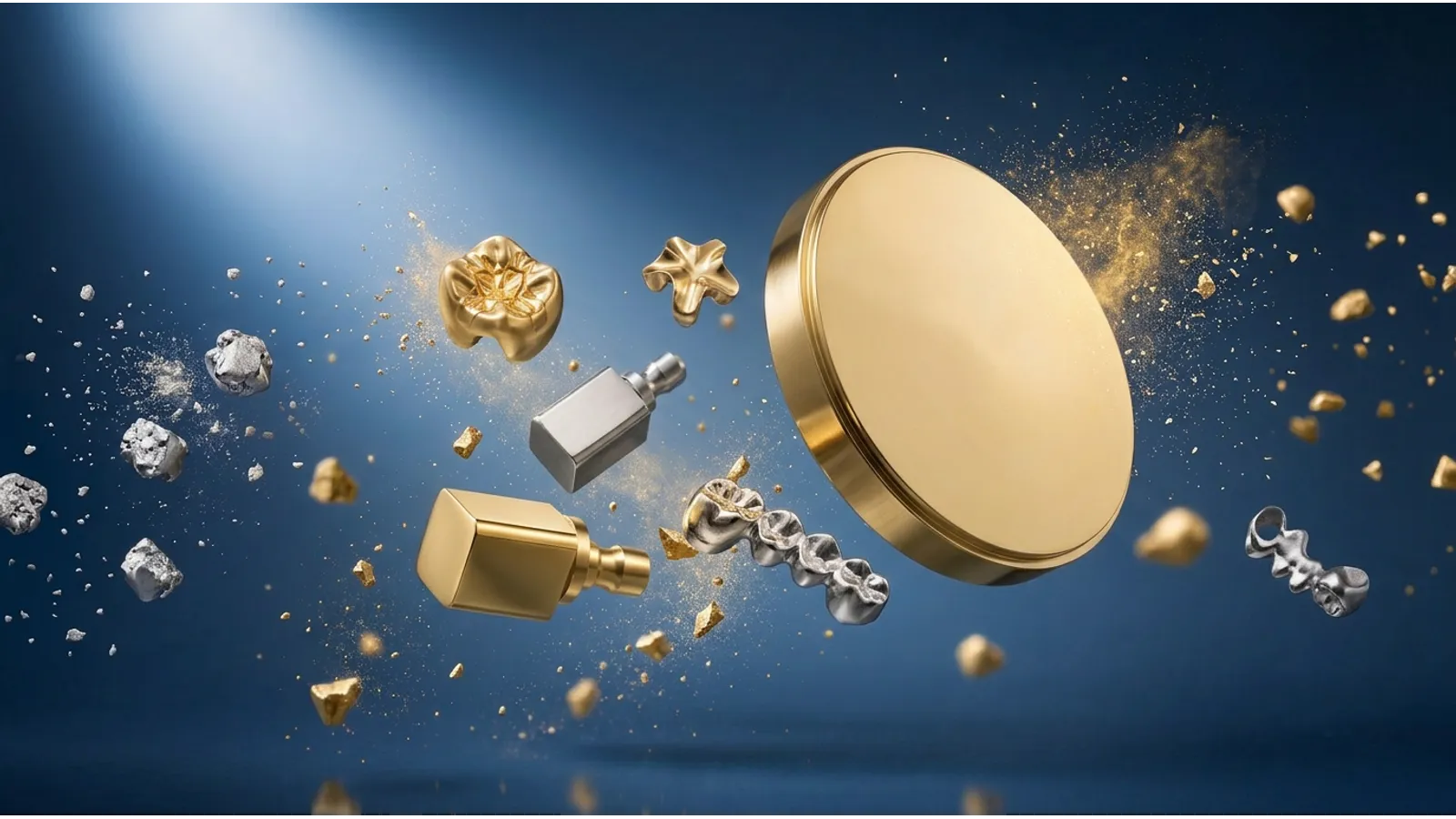
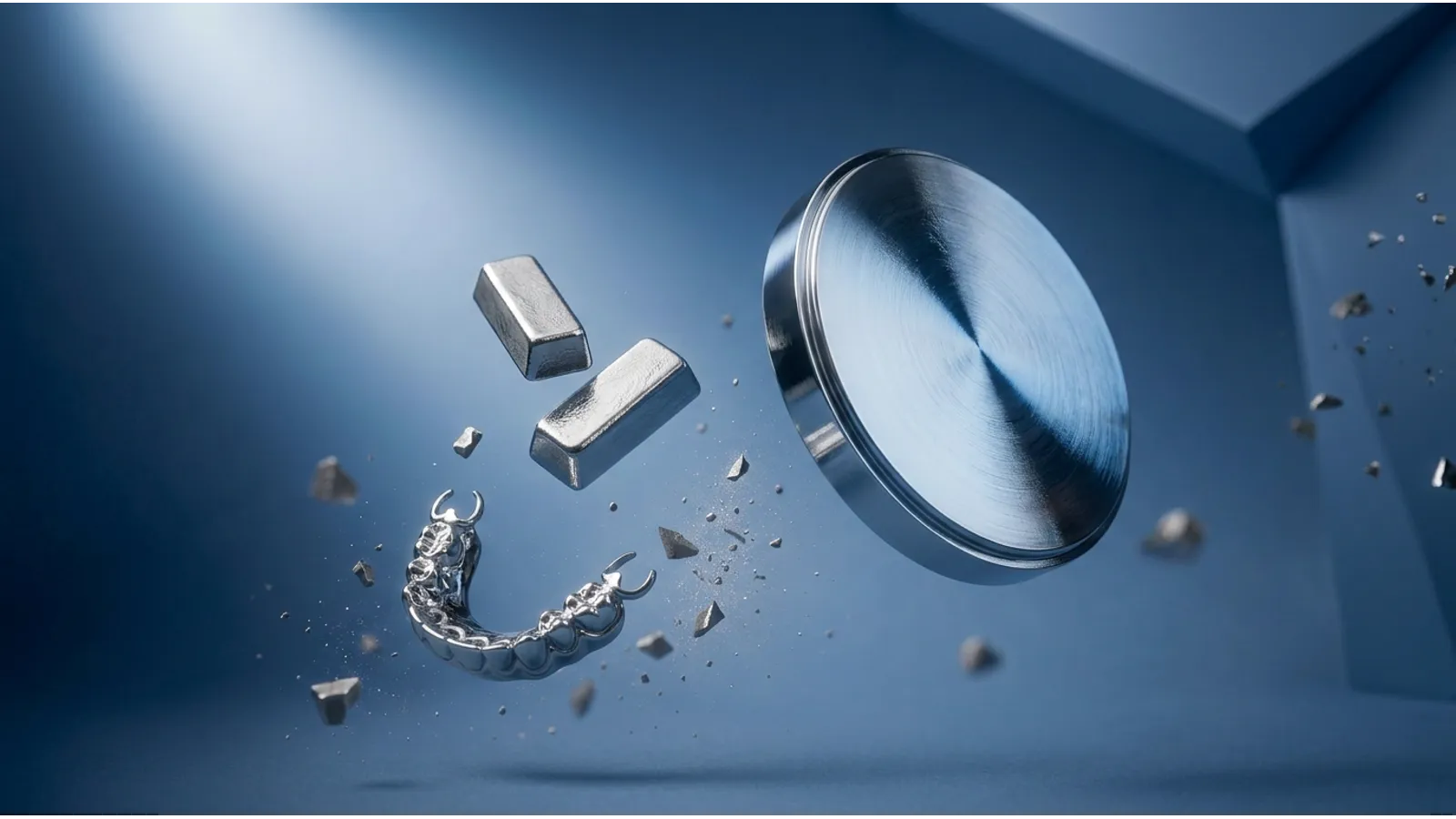
The material determines chip space and blade count. Soft materials need room for the chip, hard ones need a stable blade.
| Material | Fluting | Reason |
|---|---|---|
| Denture acrylic | Coarse, cross-cut | Large chip space, clogs less |
| Plaster | Coarse | High removal, dry with extraction |
| Non-precious alloy | High blade count, stable geometry | Tough material, the blade must hold |
| Precious metal | Medium fluting | Softer, tends to smear |
| Finish on acrylic | Fine fluting | Smooth surface before polishing |
Because the speed is too high. The acrylic melts at the blade and sticks in the chip space instead of coming away as a chip.
Reduce the speed and work with steady feed rather than pressure. A clogged cutter can be cleaned and will work again, an overheated acrylic margin cannot.
Directly after use, before residues harden. Ultrasound and a brush clear acrylic and plaster from the chip spaces.
Dried residues make an intact instrument appear blunt. Before discarding a cutter, clean it thoroughly and check again. In practice this saves more instruments than one would expect.
No. Zirconium oxide is harder than carbide and blunts the blades immediately. Sintered diamond grinders are intended for that.
Yes. For non-precious alloys, flutings with a high blade count and stable geometry are used. For precious metals, coarser flutings are sufficient because the material is softer.
Shank and size. Laboratory cutters have the HP shank and larger working parts, because more material is removed in less time in the laboratory.
Clinical instruments are designed for contra-angle handpieces and turbines and are considerably smaller. For parallel surfaces on telescopes we offer dedicated milling instruments, and for metal and castings the ceramic grinders.