Wissen06 July 20267 min readby rotatec
Speed: Diamond Burs, Carbide Burs, Contra-Angles
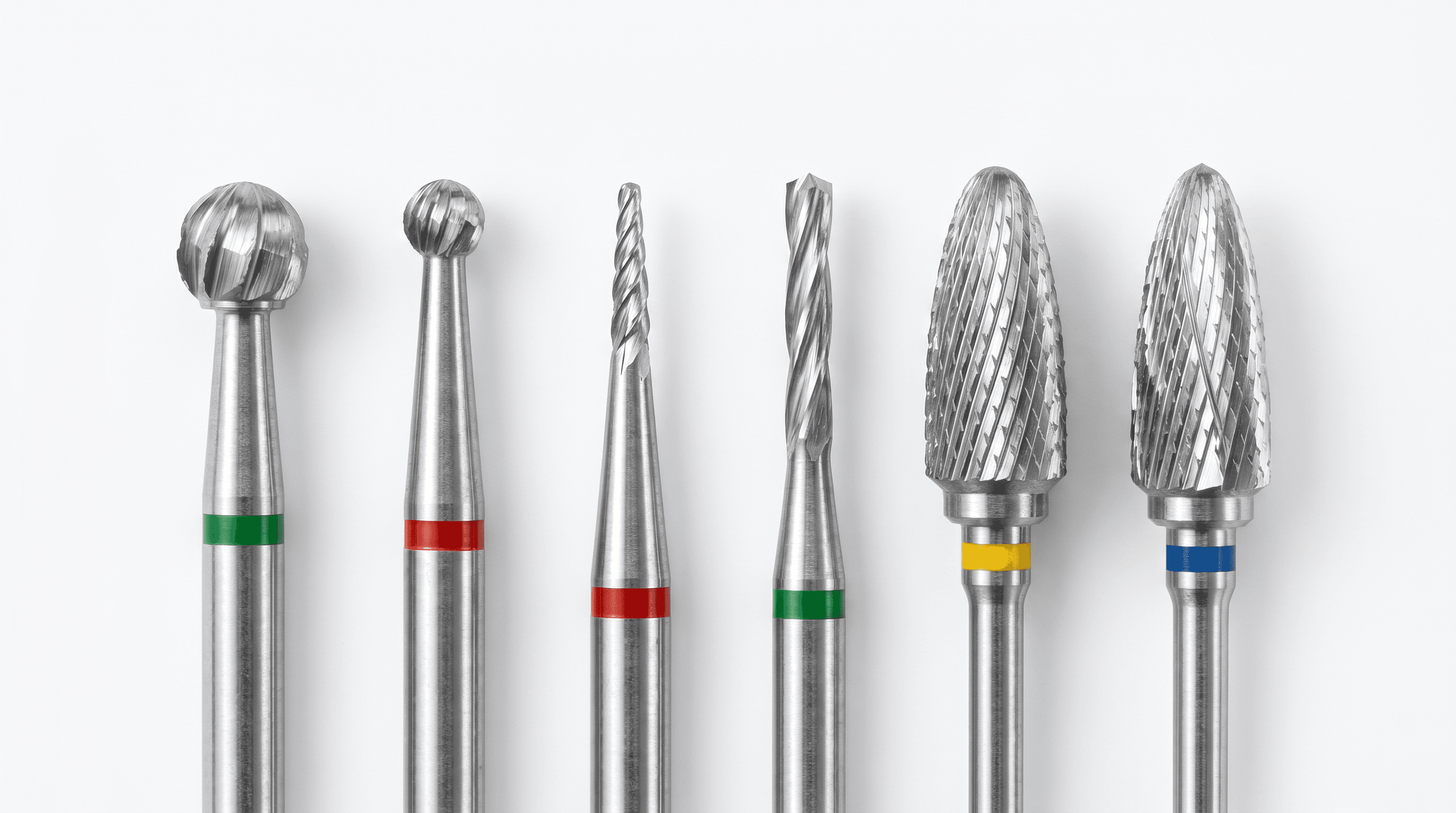
Speed for diamond and carbide burs: red, blue and green contra-angle, plus the maximum speed per head diameter from 450,000 down to 95,000 min⁻¹.

Wird geladen …
2'413 items in stock, ready to ship in 48 hours.
Speed for diamond and carbide burs: red, blue and green contra-angle, plus the maximum speed per head diameter from 450,000 down to 95,000 min⁻¹.
The right speed for diamond burs and carbide burs depends on three factors: head diameter, material and drive. Turbine and red contra-angle deliver the high speeds for FG instruments, blue and green contra-angles the low speeds for RA instruments. The maximum speed on the label is a limit, not a recommendation.
The colour of a contra-angle indicates its transmission ratio, i.e. how much it increases or reduces the motor speed. An electric micromotor typically delivers up to 40,000 min⁻¹. The red contra-angle steps up, usually 1:5, the blue runs 1:1, the green steps down.
The table shows the usual drives with shank and achievable speed at a motor speed of 40,000 min⁻¹.
| Drive | Ratio | Speed at the instrument | Shank |
|---|---|---|---|
| Turbine | air-driven | around 300,000 to 450,000 min⁻¹ | FG |
| Red contra-angle | 1:5 | up to 200,000 min⁻¹ | FG |
| Blue contra-angle | 1:1 | up to 40,000 min⁻¹ | RA |
| Green contra-angle | reduction, e.g. 4:1 | up to 10,000 min⁻¹ | RA |
| Straight handpiece | 1:1 | up to 40,000 min⁻¹ | HP |
The red contra-angle takes FG shanks of 1.6 mm, the blue and green take RA shanks of 2.35 mm. How shank codes and lengths are standardised is explained in ISO 6360: reading grit, shank and size.
The turbine reaches the higher free-running speed, the red contra-angle holds its speed better under load. An air-driven turbine loses considerable speed under pressure because its torque is low. The electric motor behind the red contra-angle compensates and works with constant torque. For crown preparations with long diamonds this means more uniform removal; for fine corrections the turbine is sufficient.
The maximum speed of a diamond bur falls with head diameter, for FG instruments from 450,000 to 95,000 min⁻¹. The label of the individual instrument always applies.
The table shows the maximum speeds of FG diamond burs according to the item data and the cutting speed at the upper end of each step.
| Diameter | ISO size | Maximum speed FG | Cutting speed |
|---|---|---|---|
| 0.8 to 1.8 mm | 008 to 018 | 450,000 min⁻¹ | up to 42 m/s |
| 2.0 to 2.3 mm | 020 to 023 | 300,000 min⁻¹ | up to 36 m/s |
| 2.5 to 2.7 mm | 025 to 027 | 160,000 min⁻¹ | up to 23 m/s |
| 2.9 to 3.1 mm | 029 to 031 | 140,000 min⁻¹ | up to 23 m/s |
| 3.3 to 4.0 mm | 033 to 040 | 120,000 min⁻¹ | up to 25 m/s |
| 5.0 mm | 050 | 95,000 min⁻¹ | 25 m/s |
Diamond grinders with HP shank are usually approved for 40,000 min⁻¹ up to 4.0 mm, for 30,000 at 5.0 mm and for 20,000 min⁻¹ at 10.0 mm. Diamond always needs adequate water cooling, because frictional heat is generated across the entire coated surface. You will find the 1,195 instruments under diamond burs.
With carbide burs, the application determines the operating speed and the shank the upper limit. The rotatec instructions for use state these values.
The table shows the operating speeds per application.
| Application | Material | Speed |
|---|---|---|
| Cavity preparation | enamel, dentine | up to 450,000 min⁻¹ |
| Removing fillings | amalgam, composite | 60,000 to 120,000 min⁻¹ |
| Excavation | dentine | up to 2,000 min⁻¹ |
| Grinding crowns and bridges | metal | up to 30,000 min⁻¹ |
| Grinding dentures | resin | up to 20,000 min⁻¹ |
The table shows the maximum speeds of selected carbide instruments according to the item data.
| Instrument | Shank | Diameter | Maximum speed |
|---|---|---|---|
| Round bur H1 | FG | 0.5 to 1.8 mm | 450,000 min⁻¹ |
| Round bur H1 | FG | 2.1 to 2.3 mm | 300,000 min⁻¹ |
| Round bur H1 | RA | 0.5 to 2.7 mm | 100,000 min⁻¹ |
| Surgical round bur H141 | HP | 1.0 to 3.5 mm / 5.0 mm | 100,000 / 60,000 min⁻¹ |
| Laboratory cutter | HP | 2.3 mm / 5.0 to 7.0 mm | 30,000 / 15,000 min⁻¹ |
For caries excavation with the round bur this means: green or blue contra-angle, very low speed, light pressure. All values are given in the application and reprocessing recommendation for burs.
What determines removal and heat is not the speed of rotation but the cutting speed at the blade or grain. It is calculated as diameter times π times speed. A 1.4 mm ball at 450,000 min⁻¹ reaches around 33 m/s, a 2.3 mm ball at 300,000 min⁻¹ around 36 m/s. With double the diameter and the same speed, the cutting speed doubles. The limits therefore keep it within a similar range, and larger heads run slower.
The blade pattern does not shift the maximum speed, but it determines how smoothly an instrument works within the permitted range. A cross-cut breaks the chip and runs smoothly even at low speed, which is why laboratory cutters in the handpiece work between 8,000 and 30,000 min⁻¹. Fine finishing burs and fine diamond grits smooth the surface; they need a constant speed and hardly any pressure. Which blade pattern suits which material is shown in Cross-cut: choosing the right carbide cutter.
Excessive speed generates heat and wear, too little costs efficiency and makes the instrument chatter. More pressure does not compensate for a blunt blade; it raises the temperature.
The table summarises typical problems and the appropriate measure.
| Observation | Possible cause | Measure |
|---|---|---|
| Instrument vibrates or catches | speed too low, pressure too high | adjust speed, reduce pressure |
| strong heat | speed too high, no cooling | check water cooling, light pressure |
| hardly any removal | blunt blade, flutes clogged | clean or replace |
| Turbine stalls under load | too much contact pressure | reduce pressure or use red contra-angle |
For the clinic we stock carbide burs with FG, RA and HP shanks as well as diamond burs in all grits; for the laboratory, carbide cutters with the speed stated for each item. All instruments are Swiss Made to ISO 13485, in stock and ready to ship within 48 hours.
Register as a professional customer and find the right instrument in the shop.
A red contra-angle usually steps up 1:5 and thus reaches up to 200,000 min⁻¹ at a motor speed of 40,000 min⁻¹. It takes FG instruments. The maximum speed of the inserted instrument remains the upper limit.
The green contra-angle steps down, so the speed at the instrument is below that of the motor. With a 4:1 reduction it is at most 10,000 min⁻¹. It is suitable for excavation, endodontics and prophylaxis.
A contra-angle is an angled transmission instrument between motor and rotary instrument. A gear inside increases, maintains or reduces the speed. The colour on the grip shows the ratio.
The turbine is an air-driven handpiece with very high speed for FG instruments. It is used mainly to prepare enamel and dentine. Its torque is lower than that of an electric drive.
Yes, handpieces and contra-angles are reprocessed after every treatment. This includes cleaning, disinfection, lubrication with oil and, as a rule, sterilisation. The manufacturer's specifications and the recommendations of KRINKO and BfArM apply.
Yes, if they have an RA shank. rotatec stocks 59 diamond burs with RA shank 204. FG diamonds do not fit the blue contra-angle.
Because cutting speed increases with diameter. An FG diamond bur of 4.0 mm is therefore approved up to 120,000 min⁻¹, one of 1.4 mm up to 450,000 min⁻¹. This keeps the load on grain, bond and tooth comparable.
Anwendung
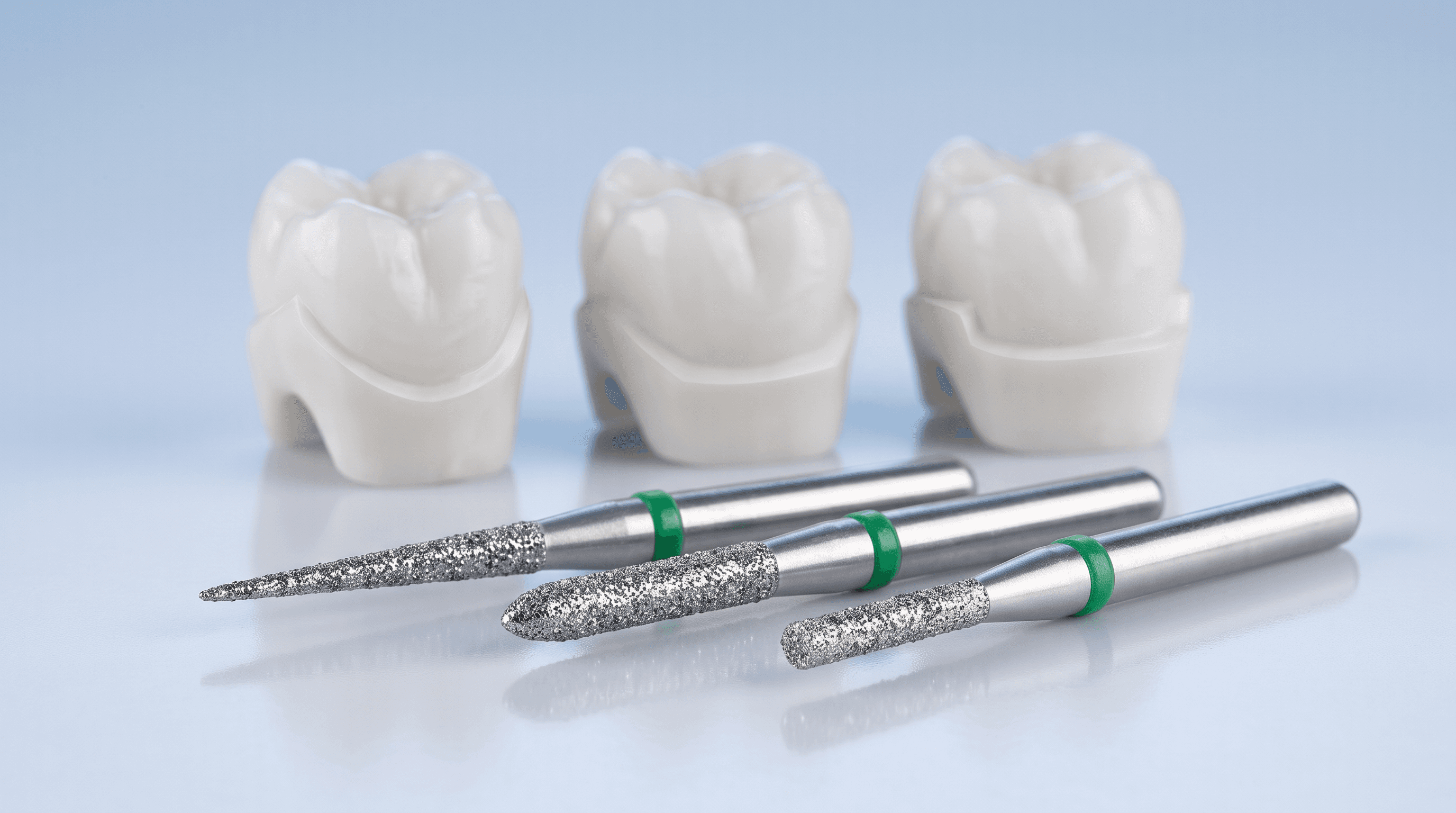
Tangential preparation, chamfer or shoulder?
Tangential preparation, chamfer or shoulder: which preparation margin suits each material, and which of 187 diamond burs in 8 shapes produce it.
Produkt
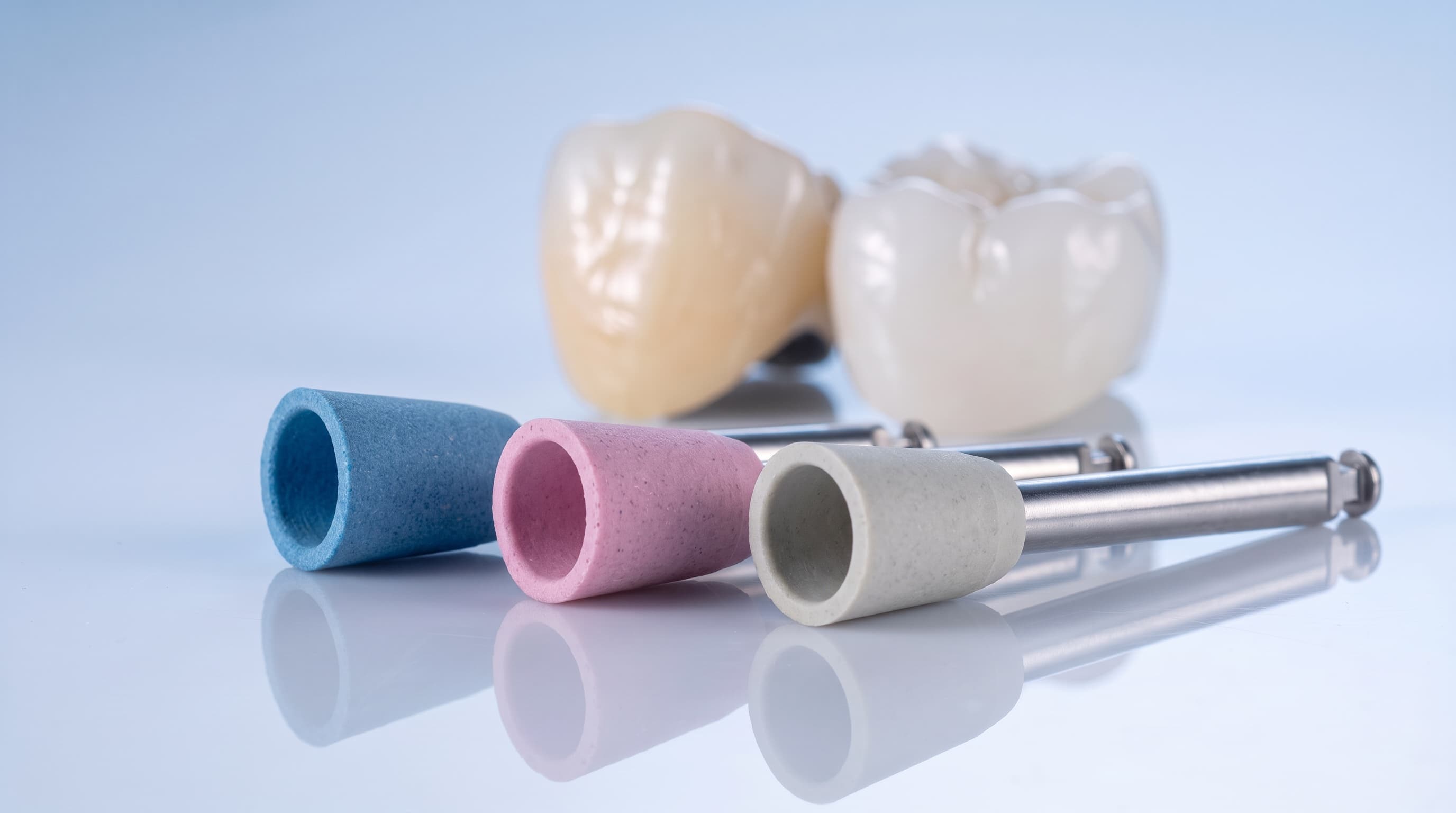
Ceramic polishers for zirconia and lithium disilicate
Ceramic polishers for practice and laboratory: cerdia polishes zirconia, lithium disilicate and feldspathic ceramic in 3 stages without paste, up to 12,000 min⁻¹. Shapes, speed.
Zahntechnik
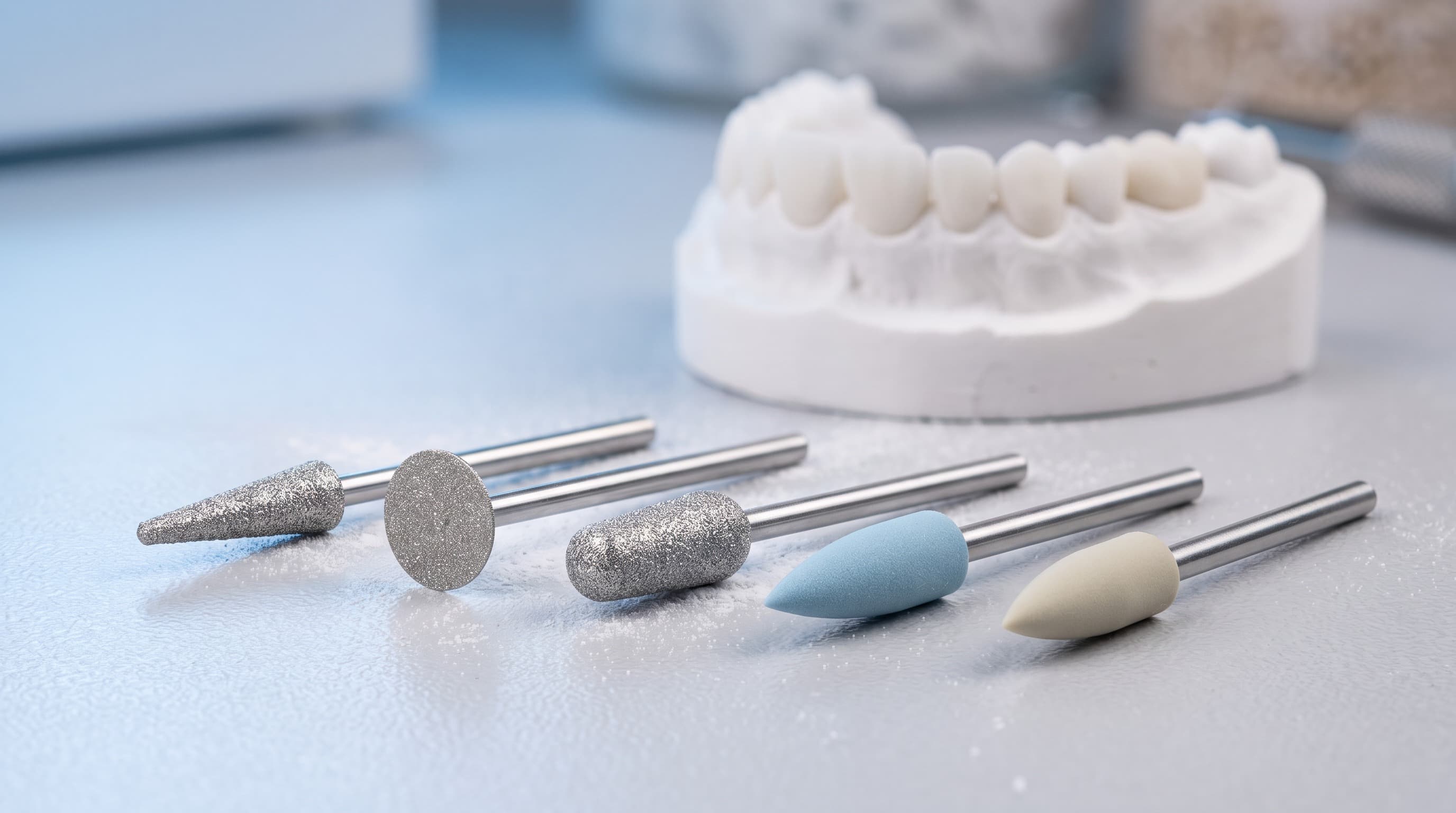
Zirconia in the Laboratory: Pre-Sintered, Sintered and Polishing
Zirconia in the laboratory: shape the white body dry, correct the sintered framework with 96 sintered diamond grinders, veneering with ceramic grinders, polishing in three stages.