Wird geladen …

EURLogin
Wird geladen …
2'417 items in stock, ready to ship in 48 hours.


1 materials · 96 items
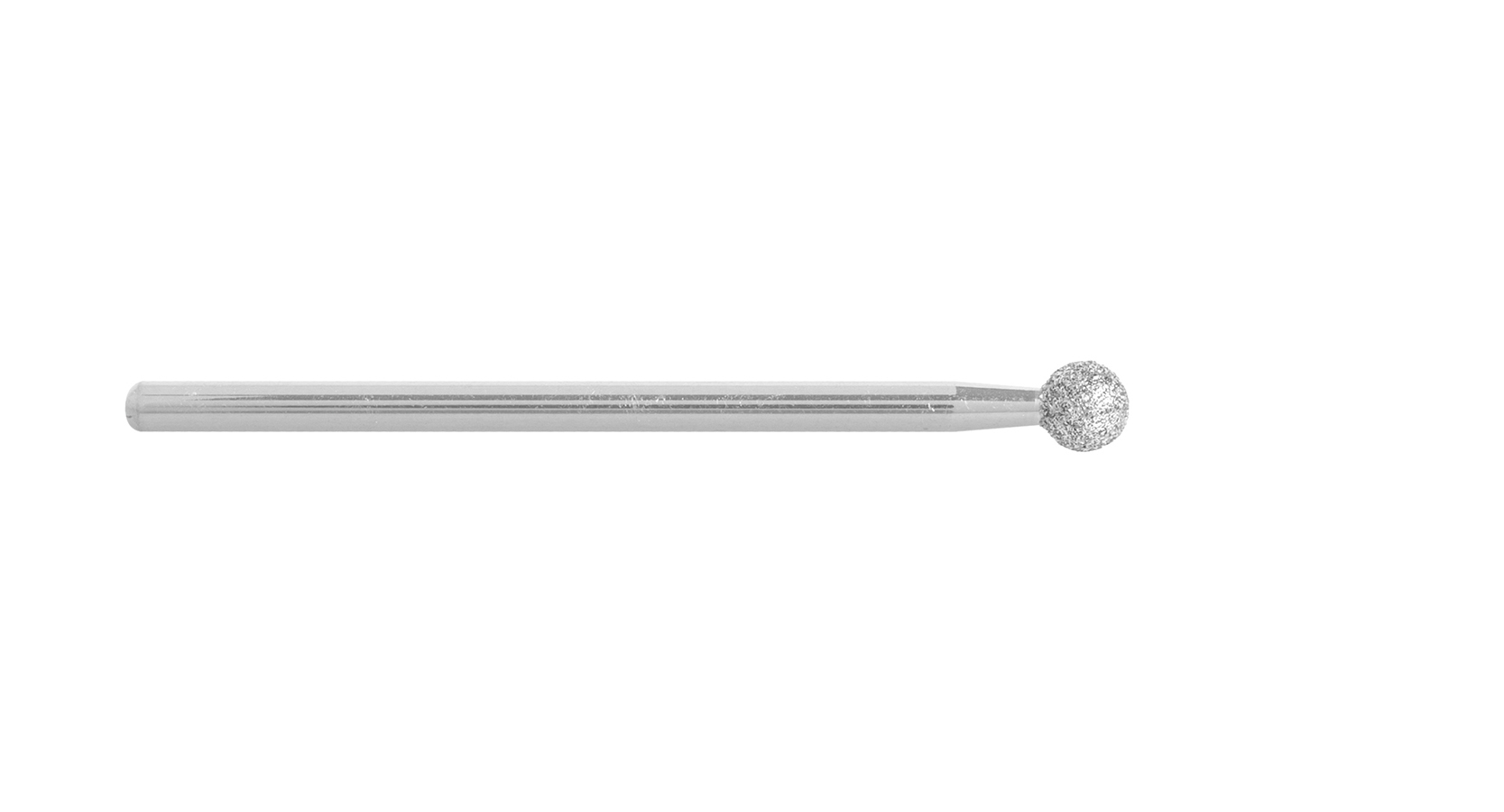
Sintered diamond grinders are laboratory instruments with diamond grain homogeneously sintered into a bronze matrix. They grind, section and contour zirconium oxide, glass and all-ceramics and other hard dental materials precisely.
Because the grain runs right through the matrix, fresh grains are exposed as wear progresses. This gives high shape retention and grinding performance that stays consistent over a long period. For the HP shank on the laboratory handpiece.
Direct from the Swiss manufacturer in Appenzell. Swiss made to ISO 13485, CE-MDR, stock items ready to ship within 48 hours.

With a galvanic coating the grain sits in a layer on the carrier body. Once that layer is worn away, the instrument is spent. In a sintered instrument the grain runs right through the matrix.
| Feature | Galvanically coated | Sintered |
|---|---|---|
| Grain position | Single layer on the carrier | Throughout the bronze matrix |
| Service life | Limited by the layer | Considerably longer |
| Grinding performance over time | Declines | Stays largely constant |
| Shape retention | Good | Very high |
| Typical use | Clinic, preparation | Laboratory, zirconia and all-ceramics |
For zirconium oxide and anything that quickly consumes galvanic instruments. Typical uses are contouring frameworks and corrections after sintering.
For soft materials such as acrylic or plaster the advantage is irrelevant. There, carbide cutters work faster and more economically.
Usually it is clogged, not worn. Zirconia dust and ceramic particles fill the spaces between the grains and disable the cutting action.
Dressing it with a suitable cleaning stone exposes the grains again and restores grinding performance. If the effect does not return, the matrix really is worn away. This distinction saves instruments, because clogged grinders are often replaced prematurely.
Zirconia with coolant. It binds the dust, keeps the structure stable and prevents local overheating.
Dry grinding produces fine zirconia dust that must be extracted. For sectioning we offer separating discs, and for metal and alloys ceramic grinders.
They are designed for the HP shank on the laboratory handpiece. In the clinic, galvanically coated diamond instruments with FG or RA shanks are used.
Coarse grit for contouring and reduction, medium for shaping, fine to prepare for polishing. Skipping a step leaves scratches that cost more polishing time later.